Are Your Business’ Social Media Outlets Ready For the Holidays?
Christmas is a week away, and that means that businesses all over are trying to keep up with the holiday rush! Regardless of the rush, as a business you need to ensure you are publicly presenting an image of festive cheer in addition to being there to help your customers who have gifts to buy, meals to plan and family to take care of in order to get everything done on time! According to Mashable, 65% of shoppers turn to social media to find the perfect gift, and, when they do, you need to make sure that you are there to help them out.
So if you haven’t turned your attention to your company’s holiday social media plan, here are 5 tips to help you get started!
1. Decorate your social media
Nothing says holiday cheer like the right decorations, so make sure you get your social media accounts decked out too! Change your cover photo to something that reflects the holiday season. You can go all out or simply give your logo a festive twist.
2. Create holiday engagement
The holidays are a great time to get people talking about your products and your business. Encourage comments and shares from your fans by posting holiday related content.
For example, post an image of your company’s Christmas tree. Then ask fans to share an image of their tree.
3. Think visual
Do you have seasonal products? Make sure you post them on your social media sites, and ensure you add call to action! Make sure you post them with seasonal sentiment, as this will help make them more engaging. A call to action will help bring your company’s name to the forefront of your customers’ minds during this busy time.
4. Holiday competitions
People love businesses that give back, and the holiday season is one of the best times of the year to show your giving side. Holiday competitions give you a great way to get your business noticed and show your customers you understand the spirit of giving.
For example, give away gift cards to help customers plan their holiday meals or buy their stocking stuffers. You can ask them to share their favorite recipe or a picture of a holiday tradition.
5. Check out what’s trending
The holiday season is the most high-stakes time of the year for businesses. Make sure you get the most exposure possible by checking what’s currently trending on social media, so you can tailor your message accordingly. Just make sure you jump on a trending topic that makes sense for your business. Your message should be relevant and fit in organically with the conversation going on.
Overall, the holiday season is a busy time for both customers and businesses, so make sure you have a strong social media strategy to increase the chances of reaching your customers. In addition, customers are turning to social media to ask questions and report problems, so make sure you are dealing with all the inquires in a timely matter. Don’t forget making customers happy at this time of the year is a top festive priority.

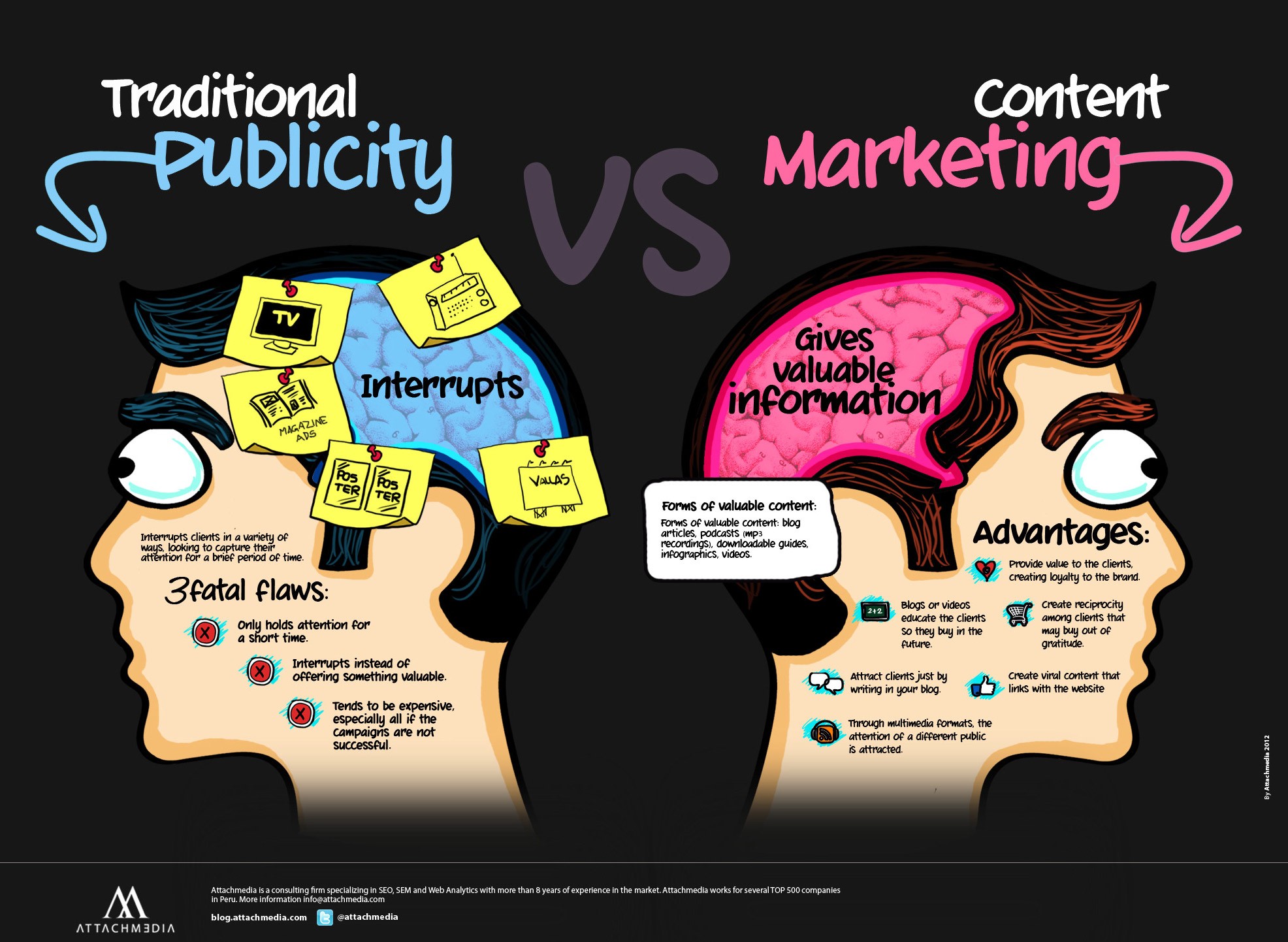
Your customers are media savvy. They have their DVRs, which allow them to fast-forward through commercials. They listen to satellite radio, so they aren’t bothered by those “pesky” radio announcements. They often ignore magazine and newspaper advertisements altogether. And they are so adept at online surfing, that they tune out website banners completely.
This is where content marketing comes in.
What exactly is content marketing?
Content marketing is a marketing process that realizes and acknowledges the fact that most consumers are now capable of completely disregarding the “noise” of the marketing efforts they are being exposed to on a daily basis. It is a technique that involves creating and curating unique, relevant content that your customers will find useful and valuable. It is the art of communicating with your potential customers without directly selling to them. Instead of simply selling your services and products, you are giving information to your prospective customers that can teach them something. If done correctly, you will be marketing without interrupting your customers’ lives and you could ultimately be rewarded with their business, support and loyalty.
What is the purpose of content marketing?
Content marketing is used to attract and develop a specific target audience with the ultimate goal of creating true customer engagement. Through using content marketing, you should be striving to change and enhance your customer’s behaviour toward your company in a positive manner. If you consistently deliver valuable information to your customers you will be able to gain their trust and following.
Why is content marketing important?
- It focuses on owning media rather than simply borrowing it.
- It enhances your social media strategy.
- It helps your SEO (search engine ranking and results), because search engines reward businesses that publish unique, quality content.
- It is a successful PR strategy. It lets you address issues readers care about rather than just promoting your business.
- It creates content which drives inbound traffic and leads
What are some examples of types of content marketing?
- Blog posts
- Social media posts
- Email newsletters
- Photos: Instagram
- Podcasts
- Videos: YouTube, Instructional, Event Recordings
- Micro-videos: Vine
- E-books
- Webinars
The bottom line is that content marketing is quickly becoming the key to having a successful marketing campaign for your business. Adjusting your current marketing campaign to include a large portion of content marketing is a great way to get started in 2014.
Is Online Audience Optimization the new SEO?
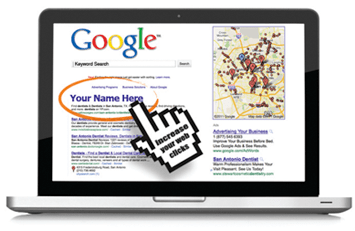
If you have a website, search engine optimization is one of those things that you know you should be doing, but you really don’t want to. Trying to figure out what keywords are best for your website and how to get people to click your websites link is more time consuming than many people realize. But, as with everything, techniques and strategies evolve.
As Google’s algorithm has evolved they have pretty much ensured that keyword stuffing and other shady techniques are no longer a viable option for website owners. In addition, the major change of making search secure, which means that you can’t see the keywords someone is using to get to your site, has blinded website owners as to what keywords they should be using.
With all these changes, what is now important is to make a connection with your business’s audience. This is a new practice that has come around know as OAO, online audience optimization. So what does online audience optimization mean? We’ll go into detail below.
OAO takes advantage of high-quality content to create a consistent web-wide presence and generate consistent new and repeat visitors to your site. OAO combines the best practices of SEO, along with social media, content sharing, engagement mechanics, and branding.
Although OAO is an emerging strategy, many of it’s strategies can be put in place right way. Below we’ll offer tips to help get you started.
1. Focus on your brand.
Build content around your brand. Ensure that your content is true to your company’s mission and brand. Information that is important to the brand should be shared with your Webmaster, your social media strategist, your SEO team and everyone else who write content about your company. Keep in mind that every phrase and heading should be relevant to both the searcher (your potential customer) and to the product.
2. Cast a wide net.
Social media provides one of the strongest SEO correlations, so make sure you build out your presence on social media and different content sharing sites including: Google Plus, Facebook, Twitter, YouTube and Pinterest.
3. Keep a targeted audience.
Your goal should be to capture potential customers. Working to increase traffic to your site is useless if you don’t figure out a way to keep them on your site. So, you should try to target only the people who need the content that your site offers.
4. Encourage audience participation.
Did you know that time on site and the bounce rate are two factors that search engines use to evaluate websites? Offer some type of engaging content on your site that encourages user participation such as: polls, quizzes, reader-submitted content, sharing and comments.
5. Integrate your mobile strategy.
Optimize your mobile and desktop sites, not only for search engines, but for social sharing, local and national apps.
6. Don’t obsess over keyword density.
Keywords are become increasingly irrelevant with all of Google’s algorithm updates. Use your keywords in your titles and captions, and don’t worry so much about using them in the body of the text.
Overall, OAO can integrate effectively with all of your current strategies. The new strategy can enable to you begin building an ongoing relationship with your audience.

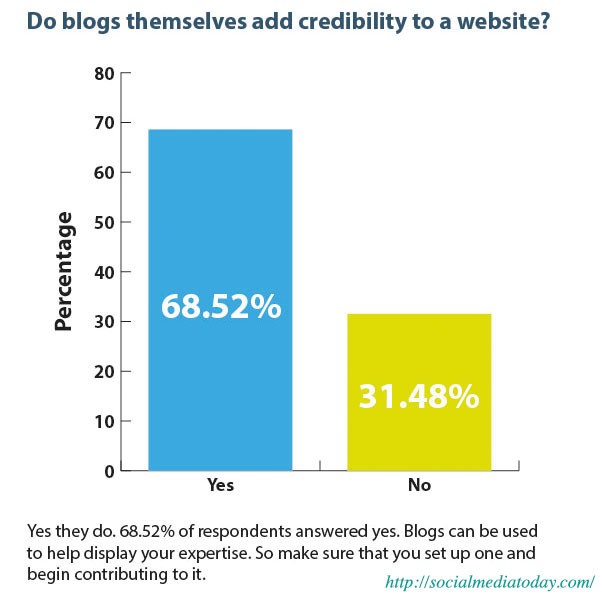
68% of People say a business blog can add credibility to your website
A business blog is a great way to not only establish a presence across the web, including your website as well as your social media channels, but it is also a great way to establish yourself as a credible authority in your industry. Social media is a great way to be in contact with your customers / followers on a daily basis, but you can’t always get your point across in one tweet or one Facebook post. A blog can allow you to expand on your social media presence with a quick teaser and a link to more information.
Why do I need a business blog?
There are two main purposes for a having a business blog. The first is to bring traffic to your website. The second is to create a conversation with your followers.
When someone goes online to search for a business within your industry, you ideally want your business to show up close to the top of the search results. In order to accomplish this, you have to have effective search engine optimization (SEO). One of the ways to create effective SEO, is to post consistently with relevant keywords and original, high quality content. A blog can help to accomplish some of this.
Because a business blog allows you to so easily share information about your business and industry, it can be a great way to create an online customer / reader/ follower base. Allowing your followers and customers a view inside your business can let them communicate with you in a more in-depth way. If your business website does not have a blog, you are missing a big opportunity to increase your company’s visibility, which could also correlate to an increase in your bottom line.
What needs to be done in a business blog?
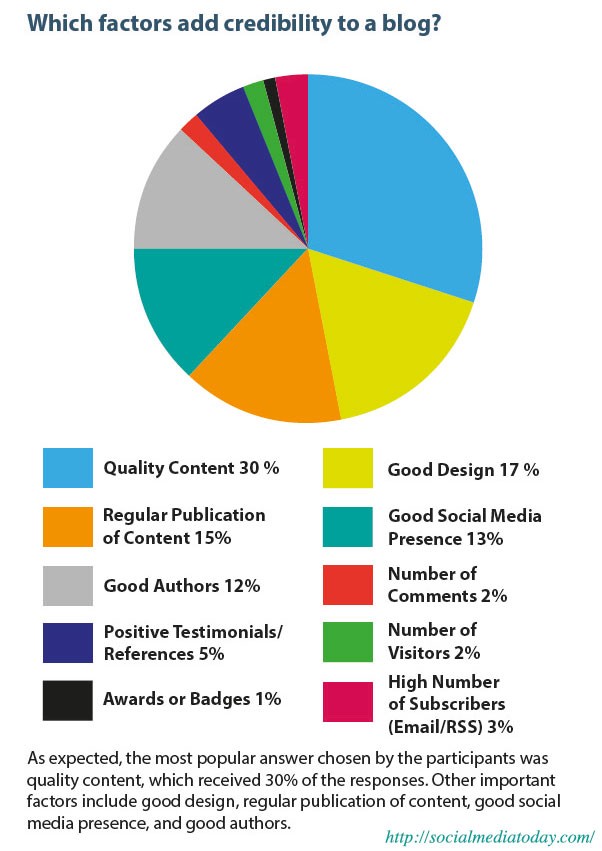
The main goal of a business blog is to engage your readers / customers and build trust with them. There are a few ways to effectively do this.
- Have a clean, good looking design with a professional logo.
- Keep your posts short and easy to understand, but not too short!
- Share with your social media channels.
- Use correct spelling and grammar.
- Have good quality photos and graphics.
- Encourage customer feedback and reviews.
- Link to trustworthy sources and sites.
- Don’t write about your competitors.
- Focus on the positives of your company and products.
- Build relationships and establish links with affiliates who will promote your products as well.
- Make sure to use keywords that your customers might be searching for.
What type of content should my business blog have?
Setting up a business blog is a fairly simple task. The difficulty begins when it comes to maintaining it with original, unique content that your readers will find useful. It is necessary to keep your customer in mind, so that you can focus on writing content that is attractive to them.
You will only convert your readers into customers if you have engaging, relevant, credible posts. Therefore, you want to tell and show your readers why your products and services are unique and reliable. You also want to make sure you keep them updated with upcoming products, new services, future events, and any other relevant news within your business. Overall, it is a great forum for sharing relevant, reliable information about your business, products, services, and more.

Get Customers Talking About Your Business.
6 tips to create effective customer engagement and turn them into your biggest advocates
There is nothing better for your business than happy customers! Happy customers help spread the word about your business to their friends, family and anyone who will listen. Customers will only promote your business so much, so you have to make it easy for them to go that extra mile without realizing they are doing any work. On average, a happy customer will bring in 3 new customers! So how do you create customer engagement and encourage these happy customers to spread the word? Here are 6 tips for turning your happy customers into your business’ biggest advocates:

1. Turn your receipts into customer feedback questionnaires.
Receipts are a guaranteed touch-point with customers. They’ve already come into your stores and liked you enough to buy something, so why not ask them for their feedback? Use your store receipts to direct them to an online survey, or go one step further, and make the survey social with links to Facebook, Twitter, Google+ and other social media sites where they can spread the word about your business with reviews and promotions.
2. Get geo-social with Foursquare, Facebook and Yelp!
Take advantage of geo-social networks like Foursquare and Facebook by giving your customers the opportunity to check-in and share their location with their networks. With over 30 million people using Foursquare and the ability to sync it with their other social media networks, it’s a great way to get your happy customers to tell others that they are at your business. In addition, you can encourage check-ins and competition (think Foursquare Mayorship) by offering special promotions for only those that check-in or hold the Mayorship.
3. Start a feedback cycle.
Online reviews have become one of the most powerful forms of advertising. According to Nielsen, 92% of consumers around the world say they trust earned media, such as recommendations from friends and family, above all other forms of advertising. So take advantage of this, and open up the line of communication between you and your customers. Send a follow up message, text or letter to remind them to leave a review of their experience with your business on your social media networks.
4. Go mobile with social apps!
Encourage your customers to upload their photos via Instagram, Facebook, Twitter or Pinterest of your products/services they use. This will help build a community around your brand, and fans can share their personal experience with your business, thus becoming an organic marketing strategy for your business.
Or go a step further and develop your own mobile app. Encourage your customers to write reviews, post content, and share information with their friends about your business all on your own branded app!
5. Automate the sharing process.
Make it simple for your customer to share your products/services with their networks by integrating Facebook, Twitter, Instagram and Pinterest on your website. By doing this you allow your customers to have instant access to recommend, like and share your products/services with the people in their social networks.
Don’t have a website? What are you waiting for?! Get an optimized website developed that can be used across desktop, tablets and mobile.
6. Display your social properties with PRIDE.
Make it easy for customers to find you online. The more members you have on your online communities the more chances you will have to convert followers into customers. Feature links to your Facebook page, Twitter handle, Pinterest page and other social communities on things like:
- Receipts
- Storefronts and walls at your business location
- Menus and Napkins
- Websites
- Email Newsletters
- Any marketing images and videos
- Local Advertising efforts, such as newspapers, radio, billboards
If you promote your social networks make sure you are managing them effectively with unique and relevant content for your followers. There is nothing worse than following a business that doesn’t care enough to regularly post and manage their social media networks. So make social media management a top priority a your business.
Customer engagement and satisfaction should be the top priorities for your business. Encourage feedback and take action on all feedback, whether it’s good or bad. Helping customers spread the word about your business can be one of the most powerful marketing tools. Just make sure you do it right.