
Your website traffic has suddenly hit a slump —now what? On online business needs a consistent stream of traffic in order to stay relevant and generate revenue; therefore, it is essential to continuously attempt to boost your website traffic. Luckily, there are a variety of different techniques that online business owners can use to turn the tides in their favor. Read on to discover some of the most effective ways to increase your brand’s website traffic, today!
Check for Penalties: If your content is plagiarized or uses other unfair or irrelevant marketing techniques, such as invisible text or links to non-relevant content, then Google can penalize your site. This penalty can create a huge loss in traffic. It’s easy to check if your site has a penalty or not by looking at the notifications on Google Search Console. Revising your content to fit the standards set by Google can increase your website traffic again!
Add Quality Backlinks: Backlinks are one of the many essential components that drive traffic to your website. If your traffic is falling, try investing in developing quality backlinks. Content that is organically connected to other sites generates more website visitors and often ranks higher on search engines. It’s also important to remove bad backlinks that connect your site to undesirable or irrelevant sites.
Purchase Niche Ads: Purchasing or renewing relevant ads is a great way to turn around falling website traffic. Ads can be costly but highly effective in generating more views to your pages. When creating an effective ad, it’s important to consider your target audience and create ads that directly appeal to them using relevant keywords and content. Additionally, if your current ads are no longer as effective, try looking for new places to advertise or revise your current ad campaign.
Boost SEO Ranking: A decrease in your SEO ranking can cause a big drop in website traffic. Maintaining relevancy in the search result rankings is important to capturing the attention of potential visitors to your site. SEO can be improved in a variety of ways, such as using accurate keywords and original content that relates to your site.
Check User Experience: A bad website design can drive away your customers completely, causing a drop-in website traffic. Effective user design is well-organized and simple to use. Navigating your website should not be difficult for the user to complete. A long loading time can force impatient visitors to abandon your site before it even loads. Check that all of the different processes on your site are easy to use and attractive to customers.
–
Don’t worry if you’ve noticed a sudden decrease in your website traffic! Improving your website traffic is important, but there are a number of different techniques you can try to use in order to revitalize your business and attract more attention. Try using multiple different methods mentioned on this list in order to best increase your online presence and website traffic.
Online marketing is an increasingly essential format of branding that can make or break the success of your business. Advertising through Google is crucial, as it is the major internet server, and any ads or online presence your business has is viewed by potential customers using Google search algorithms. Therefore, your Google Ads Quality Score —a ranking which indicates the sure experience and accuracy of your ads— is one of the most important factors your business should consider for your online marketing campaigns. If your Google Ads Quality Score isn’t where you want it to be, read on to discover all of the ways you can improve it!
Increase Expected Click-Through Rate: A good ad will have a high click-through rate, meaning that potential customers viewing your ad will be more likely to follow through and visit your site, rather than dismiss the information. Keywords play a big part in increasing click-through rate. An optimal ad’s keywords should match the keywords used by customers searching Google. Your Quality Score takes keyword accuracy into account when ranking your ad. Above all, a higher anticipated click-through rate signals to Google that your content is relevant to visitors and worthy of a higher Quality Score.
Develop Relevant Ads: A huge part of increasing the click-through rate is done through designing relevant online advertisements. Customer’s needs and desires should be targeted specifically rather than broadly. In order to improve your Google Ads Quality Sore, and also the success of your advertisements, try focusing the scope of your ad details. Ads that are closely related to search keywords will receive higher scores and more audience engagement. Don’t try to reach every internet user with your advertisements; instead, consider a narrower range of target audience and use increasingly relevant content and keywords to reach them.
Design Optimal Landing Page Experience: After your ad successfully attracts clients to your page, it is essential that your landing page provides a positive experience as well. Landing pages should be easy to navigate and well organized. The product or information mentioned int he advertisement should be clearly visible to the customer. If your Google Ads Quality Score is lower than you’d like, chances are your landing page might not provide a good experience. To improve your Google Ads Quality Score, carefully create a landing page that is useful to users and relevant to your keywords.
–
Make sure that your company’s online presence is the most effective it can be by improving your Google Ads Quality Score. Making these changes can not only help in boosting your ad’s viability, but can also lead to a higher rate of successful hits to your business. A high-Quality Score indicates a successful advertisement!
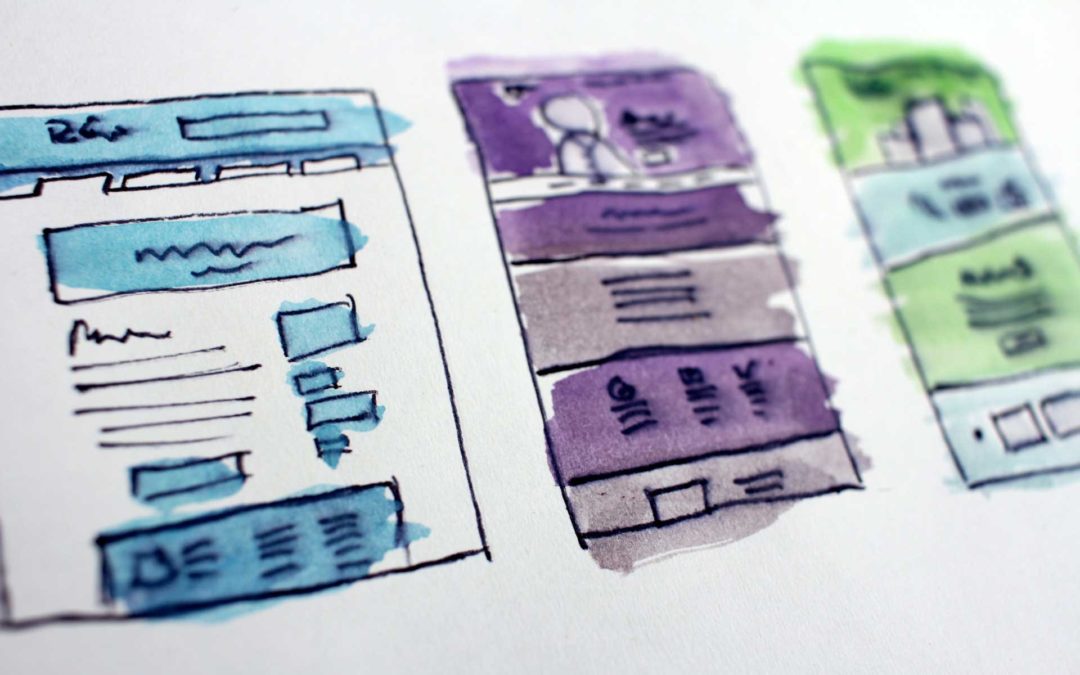
Investing in a custom website might be the last thing on your mind when it comes to improving your business —but it shouldn’t be. There are numerous reasons why you should invest in a custom website as soon as possible. Not only does it create a stronger brand image and attract customers, it also can help your company be more easily discovered.
Serious Image: In our modern society, most people’s first impression of a company occurs the moment they click on the website. When browsing online for products and services, consumers browse through any number of different companies’ websites to try and make a decision. Oftentimes, a low-quality website looks unprofessional and can turn potential customers away before they even read more. Having an attractive interface signals that your company is professional and serious, which in turn can help persuade people to use your brand.
Improve SEO: A custom website designed specifically to improve SEO and audience traffic can boost interaction and sales. Recently, Google’s website ranking has expanded the factors it uses in its algorithms to determine high ranking websites. It now includes new factors such as time spent on website or pages interacted with. Therefore, a more unique and attractive looking website will entice visitors to spend longer browsing through your content which will boost your SEO.
Stay On Brand: Maintaining a cohesive brand is an essential part of modern marketing. It can help attract new customers by showcasing an attractive design that seamlessly fits in with the other aspects of your business. A custom website can ensure that your information is presented in a manner that reflects both what might attract your target audience as well as what prior customers expect when interacting with your business. Whether chic, serious, playful, or modern, a custom website can use design elements to easily set the tone for your business.
Be Flexible: A rigid website template doesn’t allow any room for creativity, which can be problematic when the design doesn’t best suit you and your business. Don’t let yourself become trapped in an inefficient layout. By seizing creative control of your website, you can make custom changes that are more attractive to your client base. It can be as simple as adding in a new element that highlights new products, a help page with increased customer service potential, or more. The ability to be flexible is essential to creating the best online experience possible for your clients.
The reasons why you should invest in a custom website are endless. Business owners looking to treat their brand seriously and attract more customers can benefit from ditching the cookie-cutter website templates and exploring a custom style that best showcases their products and services.
In the digital world, effective online marketing and a strong digital presence are essential tools in managing and growing your business. This is especially true for small businesses, which may lack the budget for product promotion. Luckily, there are a variety of SEO tools available for small business owners to use in order to reach a wider and more relevant audience. We’ve gathered some of the best here.
Google Analytics: Free, powerful, and one of the easiest SEO tools for small businesses to start implementing, Google Analytics offers business owners a wealth of SEO information. Businesses can examine their most effective marketing tactics, preferred content, and daily visitors, among other data. Google also offers a range of additional services in addition to Google Analytics that all small business owners should take advantage of. One tool, Google Search Console, gives website owners access to a variety of different SEO statistics and also alerts them if there are errors. Google My Business is also useful for creating a seamless business profile, which can help with online ranking.
WhiteSpark: An infrequently focused open aspect of SEO improvement is citations. A website full of relevant citations ranks better on search engines. WhiteSpark specifically targets finding useful citations for your niche market. This aspect of their services are provided free of cost. They also offer the paid option of directly setting the citations up on your website. A strong website with connections and references to other places in the internet can improve your SEO and make it easier for your target audience to discover your brand.
Raven Tools: Raven Tools is a quick and easy data compilation application that takes SEO data from a variety of other places and converts that information into a weekly, monthly, or quarterly report. By allowing Raven Tools to analyze and sift through all of the aggregated data, you can spend more time and money helping out your business in other areas demanding attention. Data is taken from a variety of different tools and social media in order to provide accurate results.
Moz Pro: Moz Pro has ample support for small businesses looking to utilize SEO data to improve their businesses. The tool manages SEO and provides data about keywords, rankings, and errors on your site. Moz Pro can be actively used to manage your keyword selection as well as suggest relevant keywords based off of your target suggestions. The application has a slightly higher monthly fee than competitors but offers many different tools for small businesses to use.
Utilizing a variety of SEO tools is essential for any small business, regardless of the product or service offered. Using even just a few of the these tools can go a long way into significantly improving your company’s online presence. Don’t wait to set up effective SEO tools and digital marketing —start using these SEO tools for small businesses today.

Large companies have teams of employees working on marketing strategy and digital content to further the brand’s presence and continuously promote the company’s products and services. For small business, this online outreach is just as important as for big business, if not more so. However, small business often lacks the financial capacity to fund large-scale digital optimization services. Despite this obstacle, there are still a wide variety of applications and SEO tools for small businesses to take advantage of to ensure their company’s continued growth and development.
Google Analytics: Goggle Analytics is an all-encompassing SEO tool that provides in-depth data on trends and engagement. Keeping track of these statistics is essential for small businesses attempting to analyze which products are most popular or marketing techniques are most effective. It can calculate a variety of different subjects, such as unique page views, user outreach, and also provide deeper information on the demographics of your audience. Google also provides other SEO tools for small businesses to use, such as Google Trends and Google Search Console. Each tool differs in function; however, a combination of all Google SEO tools can provide comprehensive information vital to growing small businesses.
MozPro: An exceedingly useful SEO tool for small businesses to use, MozPro offers a wide spectrum of services in its monthly package. While the cost is high compared to the other free or low-cost SEO tools currently available on the market, the cost might be worth it for small businesses willing to invest more funds into their SEO development. For $99/month, users can receive information on how to improve their strategies and utilize current market trends, as well as track rankings and check for mistakes on your website.
Screaming Frog SEO Spider: Screaming Frog SEO Spider is a free tool that small businesses can use in order to check links on their online platforms. As backlinks and mentions can improve a website’s SEO, and in turn, draw a larger audience. By checking your site for defective links, Screaming Frog SEO Spider can point out weak links and spots requiring improvement. Best of all, this service is free to use and pairs seamlessly with Google Analytics. Like all SEO tools, it is best to constantly analyze data in a variety of different capacities; pairing together different tools ensures that small businesses receive the most accurate information on their businesses as they can possibly get.
Optimizely: An A/B testing application that assists businesses in building better SEO optimized websites. Optimizely is a platform that compares changes in design to determine which adjustments are best for the business. A monthly plan begins at $17/month and can analyze changes as small as background color to website structure in order to assist companies. The cost of the service is manageable for small businesses yet still provides plenty of assistance, making it a smart SEO tool for small businesses to utilize.