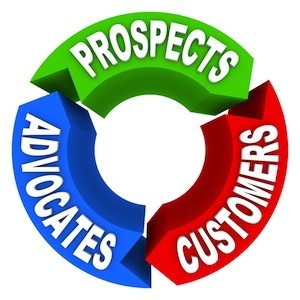
Get Customers Talking About Your Business.
6 tips to create effective customer engagement and turn them into your biggest advocates
There is nothing better for your business than happy customers! Happy customers help spread the word about your business to their friends, family and anyone who will listen. Customers will only promote your business so much, so you have to make it easy for them to go that extra mile without realizing they are doing any work. On average, a happy customer will bring in 3 new customers! So how do you create customer engagement and encourage these happy customers to spread the word? Here are 6 tips for turning your happy customers into your business’ biggest advocates:

1. Turn your receipts into customer feedback questionnaires.
Receipts are a guaranteed touch-point with customers. They’ve already come into your stores and liked you enough to buy something, so why not ask them for their feedback? Use your store receipts to direct them to an online survey, or go one step further, and make the survey social with links to Facebook, Twitter, Google+ and other social media sites where they can spread the word about your business with reviews and promotions.
2. Get geo-social with Foursquare, Facebook and Yelp!
Take advantage of geo-social networks like Foursquare and Facebook by giving your customers the opportunity to check-in and share their location with their networks. With over 30 million people using Foursquare and the ability to sync it with their other social media networks, it’s a great way to get your happy customers to tell others that they are at your business. In addition, you can encourage check-ins and competition (think Foursquare Mayorship) by offering special promotions for only those that check-in or hold the Mayorship.
3. Start a feedback cycle.
Online reviews have become one of the most powerful forms of advertising. According to Nielsen, 92% of consumers around the world say they trust earned media, such as recommendations from friends and family, above all other forms of advertising. So take advantage of this, and open up the line of communication between you and your customers. Send a follow up message, text or letter to remind them to leave a review of their experience with your business on your social media networks.
4. Go mobile with social apps!
Encourage your customers to upload their photos via Instagram, Facebook, Twitter or Pinterest of your products/services they use. This will help build a community around your brand, and fans can share their personal experience with your business, thus becoming an organic marketing strategy for your business.
Or go a step further and develop your own mobile app. Encourage your customers to write reviews, post content, and share information with their friends about your business all on your own branded app!
5. Automate the sharing process.
Make it simple for your customer to share your products/services with their networks by integrating Facebook, Twitter, Instagram and Pinterest on your website. By doing this you allow your customers to have instant access to recommend, like and share your products/services with the people in their social networks.
Don’t have a website? What are you waiting for?! Get an optimized website developed that can be used across desktop, tablets and mobile.
6. Display your social properties with PRIDE.
Make it easy for customers to find you online. The more members you have on your online communities the more chances you will have to convert followers into customers. Feature links to your Facebook page, Twitter handle, Pinterest page and other social communities on things like:
- Receipts
- Storefronts and walls at your business location
- Menus and Napkins
- Websites
- Email Newsletters
- Any marketing images and videos
- Local Advertising efforts, such as newspapers, radio, billboards
If you promote your social networks make sure you are managing them effectively with unique and relevant content for your followers. There is nothing worse than following a business that doesn’t care enough to regularly post and manage their social media networks. So make social media management a top priority a your business.
Customer engagement and satisfaction should be the top priorities for your business. Encourage feedback and take action on all feedback, whether it’s good or bad. Helping customers spread the word about your business can be one of the most powerful marketing tools. Just make sure you do it right.
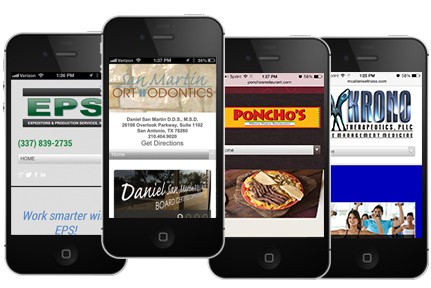
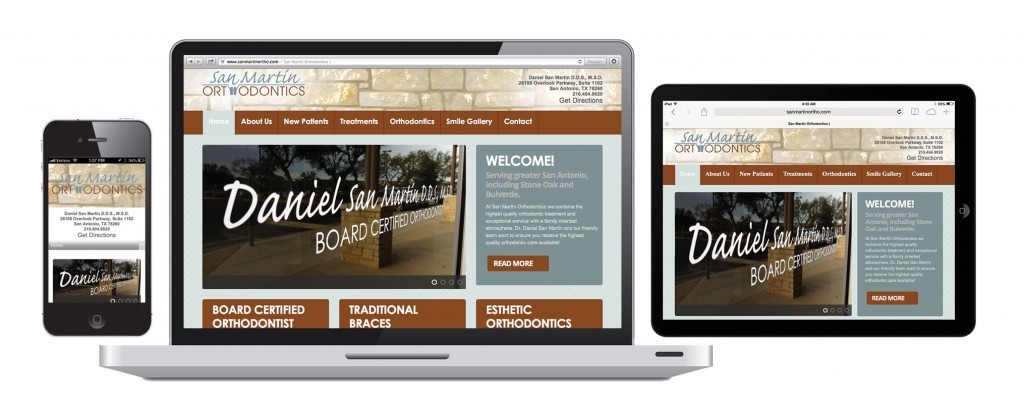
The importance of having an optimized mobile website design that is responsive on all devices is becoming increasingly important to all businesses big and small.
The amount of time and money people are spending on mobile devices such as smartphones and tablets has been steadily on the rise over the last few years, and yet, according to Adobe, there are still 45% of businesses that don’t have a mobile website that is optimized for all devices.
Mobile optimization for your site may seem like an investment you aren’t ready to take on, but just how much business are you missing out on by having a website that is not mobile friendly?
Think About This…
- 58% of all US consumers already own a smartphone. (comScore)
- Over 1.2 billion people access the web from their mobile devices. (Trinity Digital Marketing)
- Global mobile traffic now accounts for 15% of all Internet traffic. (Internet Trends 2013)
- 50% of smartphone Internet users surveyed said that even if they like a business, they would use it less often if its website did not meet their mobile-friendly standards. (Google)
- 61% of people have a better opinion of brands when they offer a good mobile experience. (Latitude)
- 95% of smartphone users have searched for local info. (Google)
- Tablet users spend 50% more than PC users. (Adobe)
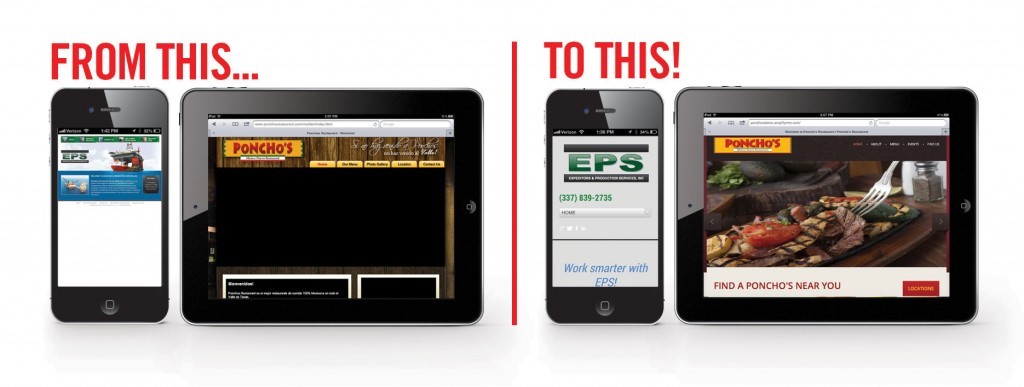
Responsive Web Design is a must across all devices.
Remember This…
Mobile Sites Lead to Purchases
Although this may seem like a given, a Google survey confirmed that shoppers are more likely to buy a product or service from a mobile-optimized site. In addition, 78% of smartphone owners and 75% of tablet owners consider the “look and feel” of a company’s mobile website when considering whether or not to make a purchase from it. (Kentico Software)
Non-Optimized Sites Drive Customers Away
A large majority of survey participants said that they are looking for responsive website design. Instead of switching to a PC to find what they want from your site, they will instead find a competitor that is mobile friendly. (Google) According to Compuware, 1 in 3 respondents said that a poor mobile application experience would drive them to a competitor.
Bad Mobile Experiences Can Damage Your Company Brand
A bad mobile experience can cause frustration and annoyance with your customers. Not having a mobile friendly website design can make your customer feel as though you do not care about your business. Although more than 75% of smartphone and tablet owners say they often return to websites that are visually appealing and function well on their devices, 44% say they would never go back to the site, and 52% would not return often if the website is not responsive and does not perform well on their device. (Kentico Software)
Is it worth not having a mobile optimized site for your business?
It’s time to optimize your mobile website and take it…

If you’re using social media outlets for your business, I bet that you are always on the hunt for the “magic formula” to creating the most engaging social media posts possible. As businesses, you want to capture the attention of your followers and get them to ‘like’, ‘tweet’, ‘pin’ and ‘share’ your post with everyone!
Sadly, there isn’t a “magic formula” of variables you need to have to ensure your post will be engaging. Each social media network operates a little differently, and every business has its own, unique customers with individual tastes and preferences.
One thing we can offer you though, are a couple of guidelines that can help you craft the best social media updates and posts possible for each social media network – Facebook, Twitter, Pinterest, and Google+. These basic tips will help you create more engaging posts and updates for your followers.
Facebook
Keep things positive.
Don’t be a Debbie Downer. Customers engage more with positive brands. Post a status that will help inspire and excite your followers.
Provide a link.
Include links to your website. Shorten your URL using bit.ly, which now allows you to edit the characters at the end of a link and gives you analytics on clicks. This will help your link stand out and increase click-throughs.
Include images.
Images can help you capture your customers’ attention and encourage them to share your content among their friends. It can be as simple as giving them a preview of a new product to entice them to come in to the store or visit your website.
Engage with users.
Simply posting a status isn’t enough. Part of what makes social media great is the instant two-way communication. Make sure you are engaging and building relationships with your fans through conversational dialogue when they comment on your posts.
Don’t forget to be mobile friendly.
Almost everyone uses their mobile phones now, for everything, so make sure the content you post can be seen on mobile devices.
Be available.
In today’s connected world, customers expect you to respond past the 8-5 workday. Be sure to post when you audience is most likely to engage, which might be during nonworking hours.
Twitter
Format.
Ask a question, give insights, and post facts and figures to capture your followers’ attention, and encourage a retweet.
Call to action.
Don’t be afraid to tell your followers what to do next. Be clear, and lead them to what the next step is with directions such as: “retweet this,” “share this,” or “use hashtag ‘x’.”
Mentions.
Use mentions to encourage influencers to engage with your business. This will help build your online creditability and online Klout.
Grammar.
Try to be as grammatically correct as you can. With 140 characters we know it’s sometimes a challenge to get your message across, but avoid abbreviations and use capital letters in the correct places.
Retweet.
Establish yourself as gatekeeper of great information and retweet relevant information to your followers. Also, don’t forget to thank people who retweet you!
Shorten URLs.
Bit.ly links generate more retweets than regular URLs. So don’t forget to shorten all URLs you tweet.
Pinterest
No Humans Faces
Images shared by brands without human faces are repined 23% more times.
Just a little background.
Try to keep your background under 40% of the entire image. When background is above that repins drop by 25-50%.
Multiple colors.
Keep your pins colorful! Pins with multiple dominate colors garner 3x more repins.
Light and colors.
By using a 50% color saturation on your images you can increase your repin rate by up to 4x.
Google+
Tag.
Tag brands and people that are relevant to your post. This allows for you post to get more exposure and increased engagement.
Use hashtags.
Hashtags help increase your audience size by allowing your content to be found easily. It’s a great way to not only meet people but for other people to find your post as well.
Use full size images.
Using bright, full sized images helps capture your viewers’ attention and increase the probability of +1’s.
Engage with users.
Just like with Facebook and Twitter, you have to take the time to reply to everyone who comments and shares your posts. You have to open the lines of communication so users keep coming back to your posts.
With all social media networks you must remember to always keep in mind what your followers want, and strive to post information that benefits them. Social media can be a great asset to every business, but you have to invest the time to do it right.
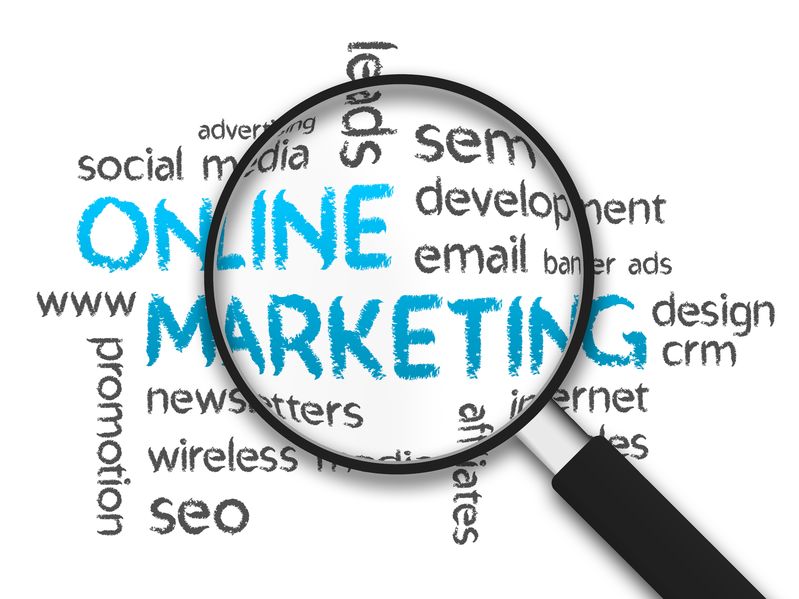
Online marketing has been growing more and more in popularity. This trend is very common among start-ups and small business owners that have minimal advertising budgets. Online marketing can be a scary venture for those who are inexperienced.
Where do I start?
How much should I pay for online advertising?
What websites / services should I use?
How do I get my message where my customers are?
These are just a few of the common questions business owners have when beginning online marketing. Grasping the full realm of the online marketing world is a process that can take years and is often ongoing due to its ever-changing nature. Getting started with online marketing is manageable, but there are a few tips you should remember when doing so.
1. You don’t accept the reality of time.
Setting up profiles on all of the various social media sites, building a website, and setting up and claiming your listings on all of the various online directory websites can be a daunting task, and now you are going to have to set aside time to effectively manage all of those accounts. It will take much more effort and time than you initially think to establish an online presence, build a following, monitor for negative & positive reviews, and keep your followers engaged.
2. You spread yourself too thin.
It is tempting to want to have your business listed and marketed on every single social media platform available, but the reality is that resources are limited, and if you spread yourself too thin across too many social media networks, you will end up with less than desirable results. Start with one or two that you think fit your target market, build your audience, perfect your engagement on those sites, and then start adding other networks, but make sure not to add more than you can handle with your resources.
3. You are not engaging your online audience.
You’ve gotten to the step where you’ve built a good base following, but you aren’t getting the results you want. The most common reason this happens is that you are not engaging your audience. You must always make sure to post content that is relevant to your business and products, but you do not want all of your content to be simple advertisement. Post content that your audience will find useful and valuable, so they want to comment, share and repost. Also, make sure to respond to each and every comment, question, tweet, or other social interaction that have been left on your pages. Show your audience that you care about what they have to say and that you are active online daily.
4. You don’t have an online marketing budget.
Although it can sometimes be a daunting task to determine where to spend money, how to spend it, and how much to spend online, spending a little bit of money can save you in the long run. If done smartly, investing a small amount of money in Facebook or Twitter ads can increase traffic to your website or physical location.
Marketing your business online can sometimes be a stressful and intimidating task, but if you avoid the most common mistakes outlined above, you should be more productive and feel much more confident in your efforts.
When you’re searching for a local service, what steps do you take? Do you ask your friends? Drive around town looking for a place of service? Search the web? A recent study estimates that roughly 20% of desktop search and a whopping 40%-50% of mobile search have local intent. What should these numbers mean to small business owners? This means that if your business’ online listings are not up-to-date and accurate, the probability of a potential customer finding your business starts to decrease.
70% of the small businesses surveyed acknowledge that they don’t have the time to manage all their online listings on all of the sites that consumers use. In addition, only 23% have a good sense of how having accurate and up-to-date online listings help drive traffic to their business. Not having a presence online is comparable to your business not having signage at your physical location. So, how do you think people will be able to find your business?
Online listings aren’t just crucial for their ability to help potential customers find your physical location, but they can prove to be a great source of business information for your potential customer. Many directories now give you the ability to list your business’ menu, products, services and payment method. This gives customers a glimpse into your business and what it has to offer.
As a small business it’s sometimes hard to keep track of all the listing sites online. With hundreds of online directories, physically maintaining all entries can be a daunting task, but there are a few simple steps you can take to ensure your listing accurately reflects the most vital information of your business- name, address, and phone number.
First, assess how people are finding your business. If you have a website, make sure you have analytics, so you can track exactly where people are coming from. If your business does not have a website, ask customers when they come in store how they found your business. Then, get a website!
Next, review the top 5 to 10 sources that are driving people to your business. How is your business listed? Are there reviews? What are people saying about your business? Take the time to review each source and make updates where necessary.
Lastly, decide who is going to continuously monitor and update your business’ listings. Make sure the person who is going to be in charge of this task is well equipped with the knowledge of your products and services.
Maintaining and managing your business’ online presence is a never-ending task. Amplify offers a variety of services to help manage and monitor your online presence. As a Certified Partner of Yext, we are able seamlessly mange your business’ online listings across 45+ directory sites.
Regardless of how you choose to manage your online listings (on your own or with an agency), by keeping your business’ listings accurate across directories you can help increase your business visibility and marketing exposure.
Call us for more information (888) 482-1313.

When starting your own business branding isn’t the first thing on your mind. Although it might seem like something trivial at the beginning, establishing your brand ‘voice’ is an essential part of creating a memorable image and building loyalty among your customers. Your brand is how the public will identify your company, so you have to ensure it is as recognizable and memorable as possible.
Branding is difficult because you can’t afford to make any mistakes. One slight misstep might negatively affect your business for years to come. That’s why it is important to establish your brand from the start and continuously work hard at maintaining it.
This being said, I want to talk about 5 of the most common branding errors that small business owners have to deal with.
1. Being a Follower
One of the worst mistakes you can make as a small business is trying to similar to other business around you, whether that be a larger company or a local competitor. Consumers value a company’s individuality, so your company’s public image should be as unique as possible to ensure it doesn’t look like you are trying to copy someone else.
2. Wrong Name
A company’s name is everything. You want to ensure that you customers can easy talk about your business with out the name interrupting the flow of a casual conversation or being difficult to pronounce.
Furthermore, make sure that the name you pick for your business is unique and not easy to confuse with another business or worse, a competitor.
3. Be Committed
Ensure everyone at the company is onboard with the branding strategy for the company. You don’t want your sales team projecting an entirely different brand image then what the company is trying to establish. This means committing to a single brand identity and carefully cultivating it both within the company and with your customers.
4. Hold Yourself Accountable
There is nothing worse to a consumer then a broken promise. Don’t promise something you can’t deliver, the reputation of your company is on the line. Set realistic expectations so that your customers are never disappointed in your business or your brand.
5. Know Who You Want As a Customer
Don’t try to please everyone! Consumers are diverse and change their tastes quickly, so don’t base your brand around a trend that might be gone next week. The image you create for you business should be durable and able to stand the test of time.
Overall, the most important aspect is that you protect your brand. Ensure that every decision is made with your brand image and positioning in mind. Just because you’re a small business doesn’t mean you can leave your brand up to chance.
We know that it might seem trivial to go through this process, but once you are an established business it is much harder to shape who you are and what you are all about. So get it done from the beginning so you have a strong foundation for your business to grow and prosper.
Has this motivated you to get your businesses branding done, but don’t know where to start? We’d love to help you figure it out. Give us a call at (888)482-1313.